ALS and Alzheimer's
MISBA® platform unlocks important targets with disease-modifying potential
Progressing first-in-class validated targets for a range of large neurodegenerative disorders
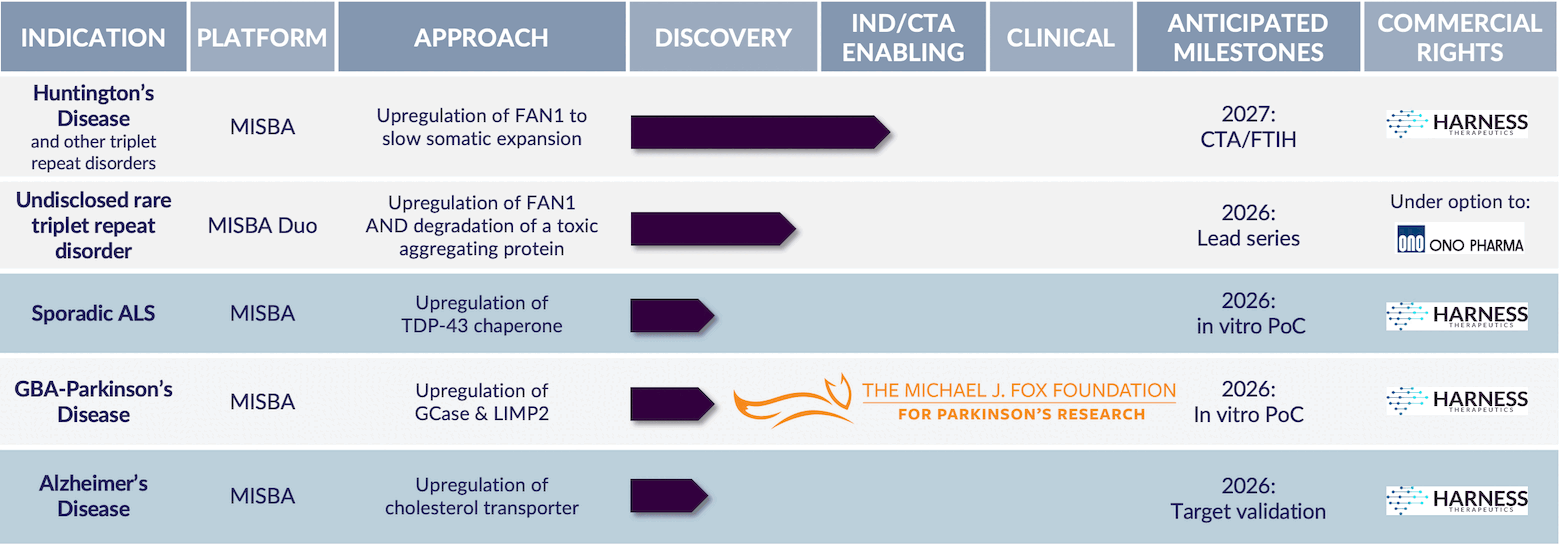
ALS and Alzheimer’s disease: Devastating diseases with few meaningful treatment options
Amyotrophic Lateral Sclerosis (ALS) and Alzheimer’s disease are two of the most prevalent and devastating neurodegenerative diseases.
ALS is a rapidly progressive, fatal disease that causes degeneration of motor neurons in the brain and spinal cord, leading to muscle weakness, paralysis, and death. It affects circa 10 in 100,000 people globally. Alzheimer’s is the most common cause of dementia, affecting over 55 million people worldwide.
Despite years of research, both remain largely untreatable, with available therapies offering only modest symptomatic relief, and no meaningful impact on disease progression for most patients.

TDP-43 relocalisation, not degradation
In both ALS and Alzheimer’s, TDP-43 mislocalisation from the nucleus to the cytoplasm has emerged as a key pathological event and one that is not addressed by any currently approved therapy. TDP-43 is a DNA/RNA-binding protein essential for healthy neuronal function.
In over 95% of ALS cases and a significant subset of Alzheimer’s disease cases, TDP-43 mislocalises from the nucleus to the cytoplasm, where it forms aggregates. This shift drives cellular dysfunction by both toxic gain-of-function (aggregate formation) and loss-of-function (nuclear depletion), ultimately leading to neurodegeneration.
Harness is targeting the restoration of TDP-43 function through nuclear remobilisation. Our programme focuses on upregulating a nuclear import receptor, a critical protein capable of relocating misfolded TDP-43 from the cytoplasm back to the nucleus—restoring its native function and preventing downstream toxicity.
This innovative approach offers several advantages:
- First-in-class target inaccessible to traditional gene or protein replacement therapies
- Intervenes upstream, remobilising TDP-43 rather than attempting to compensate for its loss downstream.
- Mechanism-driven restoration of TDP-43 function, avoiding the loss-of-function risks associated with degradation-based approaches.
- Broad potential impact across sporadic ALS and TDP-43-positive Alzheimer’s, which together represent a substantial proportion of all neurodegenerative disease
Please contact us for further information about our TDP-43 Programme.